
JavaScript SEO: How to Ensure Search Engines Can Crawl Your JS-Rendered Content
By the Lucy Consultancy Editorial Team | Published 2026-01-19 | Technical SEO
Key Takeaway: Technical guide to JavaScript SEO covering rendering, dynamic rendering, SSR, and solutions for common JS crawling issues.
💡 Free tool: Check your AI search and SEO visibility with the Lucy Consultancy Growth Tool — no signup needed.
Table of Contents
- Why Javascript Seo Is Critical for SEO in 2026
- Key Concepts and Terminology
- Step-by-Step Implementation Guide
- Advanced Techniques and Best Practices
- Common Pitfalls and Troubleshooting
- Tools and Resources for Success
Why Javascript Seo Is Critical for SEO in 2026
Technical SEO forms the foundation of all search visibility. Without a technically sound website, even the best content and strongest backlinks cannot reach their full ranking potential. Google's John Mueller has repeatedly emphasised that technical issues can prevent otherwise excellent content from being discovered and indexed.
In 2026, technical requirements have expanded beyond traditional crawling and indexing concerns. Core Web Vitals (LCP, INP, CLS) directly influence rankings, JavaScript rendering must be handled correctly for modern frameworks, structured data implementation enables rich results and AI citations, and site security has become a baseline expectation.
A Screaming Frog analysis of 20 million URLs found that 42% of websites have significant technical issues affecting their search visibility. Common problems include broken internal links, slow page load times, incorrect canonical tags, and missing or misconfigured schema markup.
At Lucy Consultancy, every engagement begins with a comprehensive technical audit because these foundational issues must be resolved before content and link building efforts can deliver their full potential.
 Figure 1: Example output from a Lucy Consultancy technical SEO audit showing prioritised issues
Key Concepts and Terminology
Before diving into implementation, here are the essential concepts for understanding javascript seo:
Crawlability refers to search engines' ability to discover and access your pages. Key factors include robots.txt configuration, XML sitemaps, internal linking structure, and server response times.
Indexability determines whether crawled pages are added to the search engine's index. Issues like noindex tags, canonical conflicts, thin content, and duplicate content can prevent indexation.
Renderability describes the search engine's ability to process JavaScript, CSS, and dynamic content to see the page as a user would. With the rise of JavaScript frameworks like React and Next.js, this has become increasingly important.
Core Web Vitals are Google's metrics for measuring real-world user experience: Largest Contentful Paint (loading, under 2.5s), Interaction to Next Paint (interactivity, under 200ms), and Cumulative Layout Shift (visual stability, under 0.1).
Structured Data uses standardised vocabularies (primarily Schema.org) to help search engines understand content meaning and relationships, enabling rich results in search.
Canonicalization is the process of indicating the preferred version of a page when multiple versions exist, preventing duplicate content issues.
Understanding these concepts is essential for diagnosing and resolving the technical issues that commonly impede search performance.
Step-by-Step Implementation Guide
Here is a systematic approach to implementing javascript seo:
Step 1: Crawl Your Website Use a tool like Screaming Frog, Sitebulb, or Semrush's Site Audit to crawl your entire website. This identifies broken links, redirect chains, missing meta data, duplicate content, and other issues.
Step 2: Review Google Search Console Examine the Coverage report for indexation issues, the Core Web Vitals report for performance problems, and the URL Inspection tool for page-specific diagnostics.
Step 3: Prioritise Issues by Impact Not all technical issues are equal. Prioritise based on: pages affected (how many), page value (how important), and severity (how much it impacts ranking potential).
Step 4: Fix Critical Issues First
- Resolve 4xx and 5xx errors
- Fix redirect chains and loops
- Correct canonical tag conflicts
- Remove unintentional noindex tags
- Submit updated XML sitemaps
Step 5: Optimise Performance
- Compress and convert images to WebP/AVIF
- Implement lazy loading for below-fold images
- Minify CSS and JavaScript
- Enable browser caching and CDN
- Optimise server response times
Step 6: Implement Structured Data
- Add Organisation schema to homepage
- Implement Article schema on blog posts
- Add FAQ schema where appropriate
- Apply Product/Review schema for e-commerce
- Test with Google's Rich Results Test
Step 7: Monitor and Maintain Set up automated monitoring for uptime, Core Web Vitals, crawl errors, and indexation changes. Technical SEO is not a one-time fix — it requires ongoing vigilance.
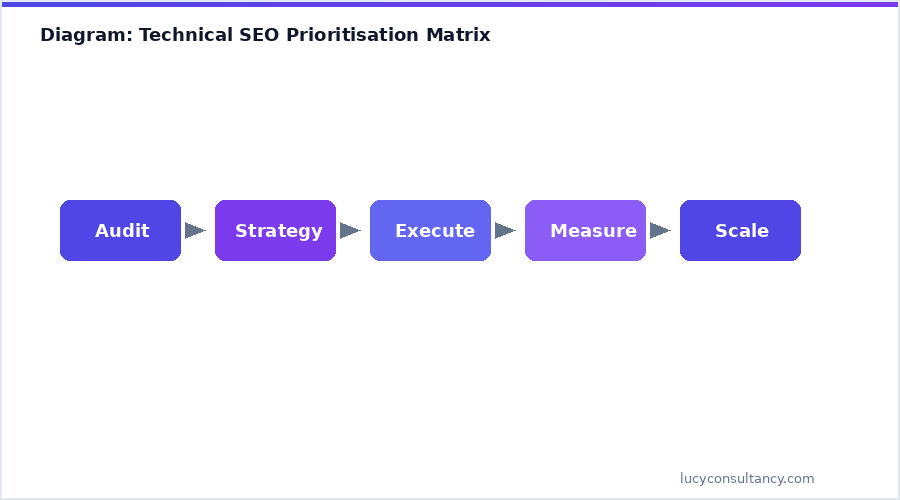 Figure 2: Prioritisation matrix for technical SEO issues based on impact and effort
Advanced Techniques and Best Practices
Beyond the fundamentals, advanced javascript seo techniques can provide significant competitive advantages:
Edge SEO and CDN-Level Optimisation Using Cloudflare Workers or similar edge computing platforms to implement SEO changes (redirects, header modifications, schema injection) at the CDN level without requiring development cycles.
Automated Quality Monitoring Setting up automated alerts for Core Web Vitals regressions, indexation drops, and crawl errors ensures issues are caught and resolved before they impact rankings.
Server-Side Rendering for JavaScript Frameworks For websites built with React, Vue, or Angular, implementing server-side rendering (SSR) or static site generation (SSG) ensures that search engines can access content without JavaScript rendering delays.
International Technical Configuration For multilingual and multi-regional sites, correct hreflang implementation, geo-targeting settings, and content delivery optimisation are critical and frequently misconfigured.
Rendering Budget Optimisation Google allocates finite resources to rendering JavaScript content. Minimising render-blocking resources and optimising critical rendering paths ensures your most important pages are fully rendered and indexed.
Common Pitfalls and Troubleshooting
Technical SEO mistakes can have severe consequences. Here are the most common pitfalls we encounter:
Accidental Noindex Deployments We have seen cases where a staging environment's noindex meta tags were accidentally deployed to production, deindexing entire websites. Always verify noindex configurations after deployments.
Redirect Chain Proliferation Over time, multiple site migrations and URL changes create chains of redirects. Each hop adds latency and can dilute link equity. Regularly audit and flatten redirect chains.
Orphan Pages Pages with no internal links pointing to them are virtually invisible to crawlers. Ensure every important page is reachable through your site's internal linking structure.
Canonicalization Conflicts Conflicting signals — a canonical tag pointing to URL A while an hreflang tag references URL B — confuse search engines and can result in the wrong page being indexed.
Mobile Rendering Differences With mobile-first indexing, Google primarily crawls the mobile version of your site. Ensure content, structured data, and meta tags are identical across mobile and desktop versions.
 Figure 3: Common indexing errors as displayed in Google Search Console
Tools and Resources for Success
The following tools are essential for effective javascript seo:
Crawling and Auditing: Screaming Frog SEO Spider (free for up to 500 URLs), Sitebulb, Lumar (formerly Deepcrawl)
Performance Monitoring: Google PageSpeed Insights, GTmetrix, WebPageTest, Chrome DevTools
Search Console: Google Search Console (essential, free), Bing Webmaster Tools
Structured Data: Google's Rich Results Test, Schema.org documentation, Schema Markup Validator
Log File Analysis: Screaming Frog Log Analyser, Oncrawl, Botify
Monitoring and Alerts: ContentKing (now Conductor), Little Warden, Sentry (for JavaScript errors)
At Lucy Consultancy, we combine these tools with proprietary processes developed through years of technical auditing experience. Our technical SEO services includes ongoing monitoring, quarterly audits, and priority support for urgent technical issues.
About Lucy Consultancy
Lucy Consultancy is a leading SEO and AEO agency helping businesses achieve sustainable organic growth through data-driven search strategies. Our team combines deep technical expertise with creative content marketing to deliver measurable results across both traditional search and AI-powered platforms.
Ready to grow your organic visibility? Contact Lucy Consultancy for a free SEO audit and strategy consultation.
Sources and References
- Google Search Central Documentation (2026)
- Ahrefs Blog — SEO Research and Data Studies
- Semrush — State of Search Report 2026
- BrightEdge Research — Organic Search Statistics
- Gartner — AI Search Market Predictions
- Statista — Digital Marketing Statistics 2026
- BrightLocal — Local Consumer Review Survey 2026
- Google Search Quality Rater Guidelines (Latest Edition)
Keywords: javascript seo, js rendering seo, dynamic rendering, server side rendering seo
Category: Technical SEO | Last Updated: 2026-01-19