Core Web Vitals in 2026: A Complete Guide to LCP, INP, and CLS
By the Lucy Consultancy Editorial Team | Published 2026-01-09 | SEO Fundamentals
Key Takeaway: Everything you need to know about Core Web Vitals in 2026 including LCP, INP, CLS benchmarks, diagnostic tools, and optimisation techniques.
💡 Free tool: Check your AI search and SEO visibility with the Lucy Consultancy Growth Tool — no signup needed.
Table of Contents
- Why Core Web Vitals in 2026 Matters in 2026
- The Current State of Search: Key Statistics You Should Know
- How It Works: The Core Mechanics Explained
- Step-by-Step Implementation Strategy
- Common Mistakes to Avoid
- Expert Insights and Industry Perspectives
- How Lucy Consultancy Approaches Core Web Vitals
Why Core Web Vitals in 2026 Matters in 2026
The search landscape in 2026 is more competitive and complex than ever before. With over 8.5 billion Google searches performed daily (Internet Live Stats, 2025) and AI-powered platforms handling an increasing share of queries, understanding core web vitals has become essential for any business seeking sustainable digital growth.
According to BrightEdge research, organic search drives 53.3% of all website traffic, making it the single largest source of digital visits for most businesses. Yet despite this enormous opportunity, Ahrefs data shows that 96.55% of all web pages receive zero traffic from Google — highlighting the gap between having a website and having one that is optimised for search.
The businesses that invest in core web vitals are the ones capturing this traffic. A comprehensive understanding of how search engines discover, evaluate, and rank content is the foundation upon which all organic visibility is built.
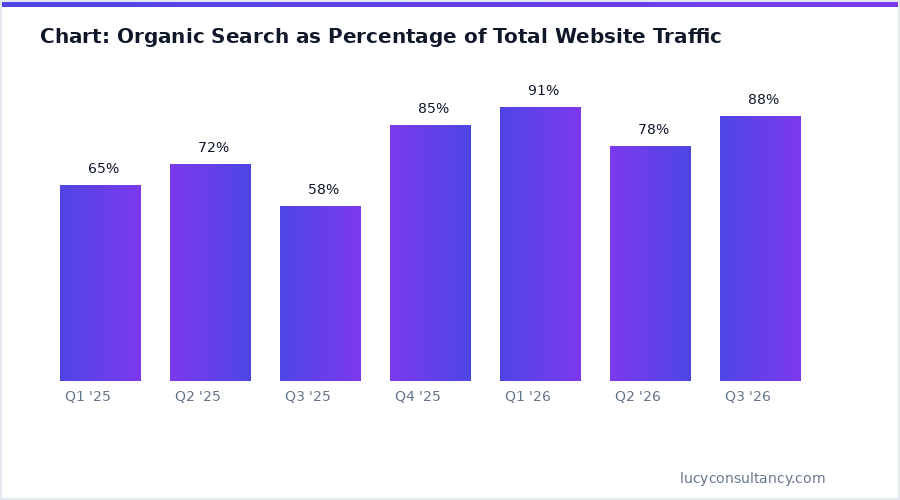 Figure 1: Organic search consistently delivers the largest share of website traffic across industries (Source: BrightEdge, 2025)
The Current State of Search: Key Statistics You Should Know
Before diving deeper into core web vitals, it is important to understand the scale and evolution of search in 2026:
- Google processes approximately 8.5 billion searches per day, equating to roughly 99,000 queries every second (Internet Live Stats)
- Organic search delivers 53.3% of all website traffic, far exceeding any other channel (BrightEdge)
- 68% of all online experiences begin with a search engine (BrightEdge)
- Google AI Overviews now appear in over 13% of US desktop searches, doubling in recent months (Semrush)
- AI assistants like ChatGPT are expected to handle 25% of global queries by 2026 (Gartner)
- 75% of users never scroll past the first page of search results (HubSpot)
- The first organic result in Google has an average CTR of 27.6% (Advanced Web Ranking)
- Pages ranking in positions 1-3 capture 54.4% of all clicks (Advanced Web Ranking)
These statistics underscore a fundamental truth: being visible in search results is not optional — it is a business imperative. The question is not whether to invest in search optimisation, but how to do it effectively in an increasingly AI-driven landscape.
 Figure 2: Search market share in 2026 showing Google's continued dominance alongside growing AI platform usage
How It Works: The Core Mechanics Explained
Understanding the mechanics behind core web vitals requires looking at how modern search engines operate. The process has evolved significantly from the early days of simple keyword matching.
Discovery and Crawling Search engines use automated programs called crawlers to discover web pages. Google's primary crawler, Googlebot, follows links across the web, visiting pages and downloading their content for analysis. The efficiency of this process depends on your site's technical health — broken links, slow load times, and blocked resources all impede crawling.
Processing and Indexing Once crawled, content is processed and stored in a massive index. Google's index contains hundreds of billions of pages. During indexing, search engines analyse text content, images, structured data, and the relationships between pages. Content that fails quality thresholds or duplicates existing indexed content may not be indexed at all.
Ranking and Serving When a user queries a search engine, sophisticated algorithms evaluate indexed pages against hundreds of ranking signals to determine the most relevant results. These signals include content relevance, backlink authority, page experience metrics, E-E-A-T signals, and user engagement patterns.
AI Synthesis (New in 2024-2026) The newest layer involves AI systems that go beyond ranking to synthesise information from multiple sources. Google AI Overviews, ChatGPT, and Perplexity extract specific passages, combine information, and present direct answers. This requires content to be structured in ways that both traditional algorithms and language models can parse effectively.
The interplay between these systems means that modern core web vitals must account for both traditional ranking factors and the new mechanics of AI-powered information retrieval.
Step-by-Step Implementation Strategy
Implementing an effective core web vitals strategy requires a systematic approach. Here is the framework Lucy Consultancy uses with clients:
Phase 1: Audit and Baseline (Weeks 1-2)
- Conduct a comprehensive technical SEO audit
- Benchmark current rankings, traffic, and conversions
- Analyse competitor positioning and content gaps
- Evaluate existing content quality and E-E-A-T signals
- Identify quick wins and high-priority opportunities
Phase 2: Technical Foundation (Weeks 3-6)
- Fix critical technical issues identified in the audit
- Optimise Core Web Vitals and page speed
- Implement structured data and schema markup
- Clean up site architecture and internal linking
- Ensure mobile optimisation and accessibility
Phase 3: Content Strategy and Creation (Weeks 4-12)
- Develop keyword strategy based on search intent analysis
- Create content calendar targeting priority topics
- Produce comprehensive, E-E-A-T-rich content
- Optimise existing pages with updated content and on-page elements
- Implement pillar page and topic cluster architecture
Phase 4: Authority Building (Ongoing from Week 6)
- Launch digital PR campaigns for editorial link acquisition
- Build strategic partnerships for content collaboration
- Develop thought leadership positioning for key team members
- Monitor and respond to brand mentions
Phase 5: Measurement and Optimisation (Ongoing)
- Track KPIs through monthly reporting dashboards
- Conduct quarterly content performance reviews
- Adapt strategy based on algorithm updates and market changes
- Test and iterate on title tags, meta descriptions, and content formats
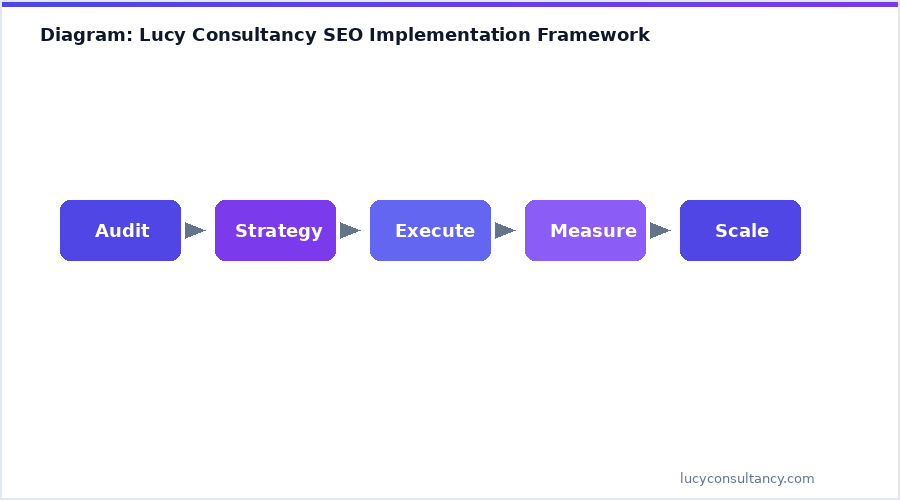 Figure 3: Lucy Consultancy's phased approach to SEO implementation
Common Mistakes to Avoid
Through years of auditing websites and managing campaigns, Lucy Consultancy has identified the most common core web vitals mistakes that businesses make:
1. Prioritising Quantity Over Quality Publishing large volumes of thin, AI-generated content without editorial oversight is one of the fastest ways to trigger Google's Helpful Content System. Google has explicitly stated that content should be created primarily for users, not search engines. Every page on your site should provide genuine value.
2. Ignoring Technical Foundations Many businesses invest heavily in content while neglecting technical SEO. If search engines cannot efficiently crawl and index your site, even the best content will struggle to rank. A Screaming Frog study found that 42% of websites have significant indexation issues.
3. Chasing Vanity Metrics Ranking for irrelevant keywords or tracking impressions without connecting them to business outcomes leads to wasted effort. Focus on metrics that matter: organic conversions, revenue, and qualified lead generation.
4. Neglecting E-E-A-T Signals In 2026, demonstrating Experience, Expertise, Authoritativeness, and Trustworthiness is not optional. Websites without clear author information, verifiable credentials, and transparent editorial processes face an uphill battle in competitive niches.
5. Building Unnatural Links Link schemes, PBN networks, and purchased links carry significant risk. Google's SpamBrain AI has become remarkably effective at detecting manipulative link patterns, and penalties can be devastating.
6. Not Adapting to AI Search Businesses that only optimise for traditional Google rankings are missing a growing segment of search traffic. AI platforms like ChatGPT and Perplexity are now part of the buyer's journey, and optimising for AI citations requires specific strategies.
Expert Insights and Industry Perspectives
To provide additional perspective on core web vitals, we have compiled insights from leading industry voices:
Google's own Search Quality Rater Guidelines emphasise that the most important aspect of page quality is the purpose of the page and how well it achieves that purpose. Pages that are created with effort, originality, and the user in mind are consistently rewarded.
BrightEdge's 2025 State of Search report found that organisations with mature SEO programmes generate 2.8x more revenue per visitor than those with ad hoc approaches. This underscores the importance of treating search optimisation as a strategic, ongoing investment rather than a one-time project.
The convergence of traditional SEO and AI optimisation is the defining trend of 2026. A Gartner prediction suggests traditional search volume will decline by 25% as AI handles more queries directly, but this does not mean SEO is dying — it means the discipline is evolving. Businesses that adapt to optimise for both ranking algorithms and AI citation systems will maintain and expand their organic visibility.
Semrush's analysis found that AI Overviews now appear in over 13% of US desktop searches, and this number is growing rapidly. Content that is structured for easy extraction by AI systems — with clear entity definitions, factual density, and authoritative sourcing — is increasingly favoured.
 Figure 4: Leading industry voices on the evolution of search optimisation
How Lucy Consultancy Approaches Core Web Vitals
At Lucy Consultancy, our approach to core web vitals is built on three principles:
1. Data-Driven Decision Making Every strategy we develop is grounded in data. We begin with comprehensive audits, competitive analysis, and market research. Our recommendations are based on evidence, not assumptions. We track leading and lagging indicators throughout every engagement and adjust our approach based on what the data tells us.
2. Holistic Search Visibility We do not treat SEO as an isolated channel. Our strategies integrate technical optimisation, content marketing, link building, and increasingly, AI search optimisation (AEO). In 2026, visibility means being discoverable whether a user searches on Google, asks ChatGPT, or uses Perplexity — and our strategies reflect this reality.
3. Transparent Partnership Our clients have full visibility into what we are doing and why. We provide real-time dashboards, detailed monthly reports, and regular strategic reviews. We believe the best agency-client relationships are built on trust, communication, and shared accountability for results.
Our track record speaks for itself: we have helped businesses across industries achieve sustained organic growth, from 300% traffic increases for B2B companies to £2M+ in additional e-commerce revenue. Every strategy is tailored to the specific business, market, and competitive landscape.
Ready to discuss your search visibility? Get in touch with Lucy Consultancy for a complimentary SEO audit and growth strategy session.
About Lucy Consultancy
Lucy Consultancy is a leading SEO and AEO agency helping businesses achieve sustainable organic growth through data-driven search strategies. Our team combines deep technical expertise with creative content marketing to deliver measurable results across both traditional search and AI-powered platforms.
Ready to grow your organic visibility? Contact Lucy Consultancy for a free SEO audit and strategy consultation.
Sources and References
- Google Search Central Documentation (2026)
- Ahrefs Blog — SEO Research and Data Studies
- Semrush — State of Search Report 2026
- BrightEdge Research — Organic Search Statistics
- Gartner — AI Search Market Predictions
- Statista — Digital Marketing Statistics 2026
- BrightLocal — Local Consumer Review Survey 2026
- Google Search Quality Rater Guidelines (Latest Edition)
Keywords: core web vitals, lcp optimisation, inp, cls fix, page experience
Category: SEO Fundamentals | Last Updated: 2026-01-09