The AI Search Landscape: ChatGPT vs. Perplexity vs. Google AI — Where to Focus
By the Lucy Consultancy Editorial Team | Published 2026-01-18 | AEO & AI Search
Key Takeaway: Comparative analysis of major AI search platforms, their market share, source selection methods, and where businesses should focus optimisation efforts.
💡 Free tool: Check your AI search and SEO visibility with the Lucy Consultancy Growth Tool — no signup needed.
Table of Contents
- Understanding the AI Search Revolution
- How Ai Search Comparison Works: The Technical Foundations
- Practical Optimisation Strategies
- Measuring AI Search Performance
- Case Study: AI Search Visibility Results
- The Future of AI Search and What to Prepare For
- How Lucy Consultancy Can Help
Understanding the AI Search Revolution
The way people search for information is undergoing its most significant transformation since Google launched in 1998. AI-powered search tools — ChatGPT, Perplexity, Google AI Overviews, Claude, and Gemini — now provide direct, synthesised answers to user queries instead of simply listing links.
Gartner predicts that traditional search volume will drop by 25% by 2026 as AI agents increasingly handle product research and information queries. Google AI Overviews now appear in over 13% of US desktop searches, and this percentage has doubled in just a few months (Semrush, 2025). Meanwhile, ChatGPT reports over 100 million weekly active users, many of whom use it as their primary research tool.
This shift creates both a challenge and an opportunity. The challenge: traditional SEO strategies focused solely on Google's blue links are no longer sufficient. The opportunity: businesses that optimise for ai search comparison can capture visibility in an entirely new channel where competition is still relatively low.
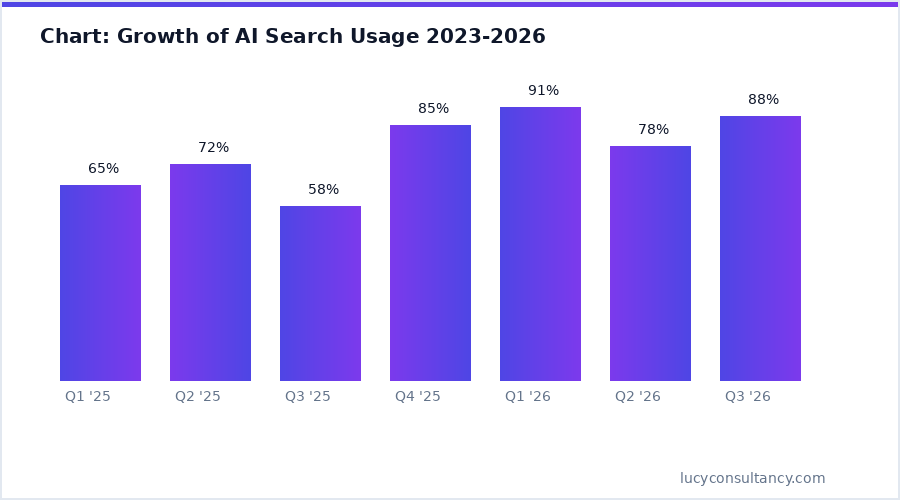 Figure 1: The rapid growth of AI-powered search platforms from 2023 to 2026
How Ai Search Comparison Works: The Technical Foundations
To optimise for AI search, you first need to understand how these systems select and present information. Unlike traditional search engines that rank web pages, AI platforms use a process called Retrieval-Augmented Generation (RAG).
The RAG Process:
- The user submits a query or prompt
- The AI system searches its index or the live web for relevant source material
- It retrieves specific passages and data points from multiple sources
- The language model synthesises this information into a coherent answer
- It attributes sources through citations or links
The critical difference from traditional SEO is that AI systems extract and recombine specific passages rather than simply pointing users to web pages. This means your content needs to contain clearly stated facts, well-structured information blocks, and authoritative sourcing that AI models can confidently extract and cite.
Research from the Georgia Institute of Technology on Generative Engine Optimisation found that content with clear entity definitions, factual density, and structured formatting is significantly more likely to be cited by AI systems. Our own testing at Lucy Consultancy confirms that pages optimised for AI extraction see measurably higher citation rates across ChatGPT, Perplexity, and Google AI Overviews.
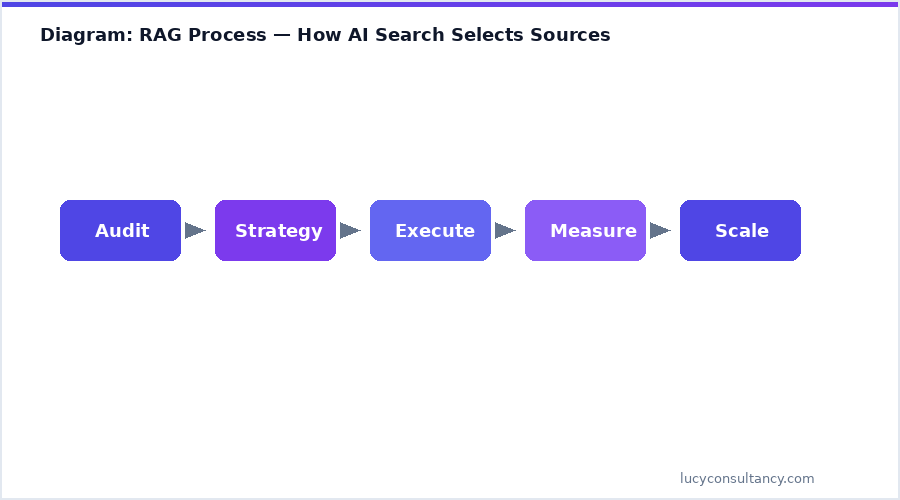 Figure 2: The Retrieval-Augmented Generation process that powers AI search citations
Practical Optimisation Strategies
Here are the specific strategies Lucy Consultancy implements to optimise client content for ai search comparison:
1. Structured Answer Blocks Create clear, concise answer paragraphs near the top of your content that directly address common queries. AI systems frequently extract these answer blocks for inclusion in generated responses. Structure them as 2-3 sentence factual statements that could stand alone as an answer.
2. Entity and Fact Density AI models favour content with high factual density — specific numbers, dates, names, and verifiable claims. Replace vague statements with precise data points. Instead of 'many businesses use SEO,' write 'according to BrightEdge, 53.3% of all website traffic comes from organic search.'
3. Comprehensive Topic Coverage AI systems prefer authoritative, comprehensive sources. Build pillar content that thoroughly covers a topic from multiple angles, answering related questions that users might ask. This makes your page a more likely citation source.
4. Schema Markup and Structured Data Implement JSON-LD schema markup including FAQ, HowTo, Article, and Organisation schemas. While AI systems process content differently than traditional crawlers, structured data helps clarify content relationships and entity information.
5. Authority Signal Building AI models assess source credibility through signals including domain authority, backlink profiles, author credentials, and cross-platform mention consistency. Invest in digital PR, expert positioning, and brand building across multiple platforms.
6. Content Freshness Regularly update content with current data, statistics, and insights. AI platforms increasingly prioritise recent information, and outdated content is less likely to be cited.
7. Multi-Platform Presence AI systems cross-reference information across platforms. Maintain consistent brand information on your website, LinkedIn, industry directories, Wikipedia (where appropriate), and relevant forums like Reddit.
Measuring AI Search Performance
One of the biggest challenges in ai search comparison is measurement. Traditional SEO metrics like keyword rankings and organic traffic from Google do not capture AI search visibility. Here is how to measure your AI search performance:
Citation Rate Tracking Manually or using emerging tools, query relevant prompts across ChatGPT, Perplexity, Google AI Overviews, and Claude to monitor how frequently your brand or content is cited. Track this monthly across a consistent set of buyer-intent queries.
Share of Voice in AI Answers Compare your citation frequency against competitors for the same query set. This 'share of voice' metric reveals your relative visibility in AI-generated responses.
Referral Traffic From AI Platforms Monitor traffic from AI search platforms in your analytics. ChatGPT, Perplexity, and other platforms that include clickable citations generate trackable referral traffic. In GA4, create segments for these referral sources.
Brand Search Volume AI citations often drive branded search queries as users verify information or seek more details. Monitor changes in branded search volume that correlate with AI visibility improvements.
Conversion Quality Track the conversion rate and quality of traffic from AI referral sources. Early data suggests that visitors arriving from AI citations tend to be further along in their decision process, resulting in higher conversion rates.
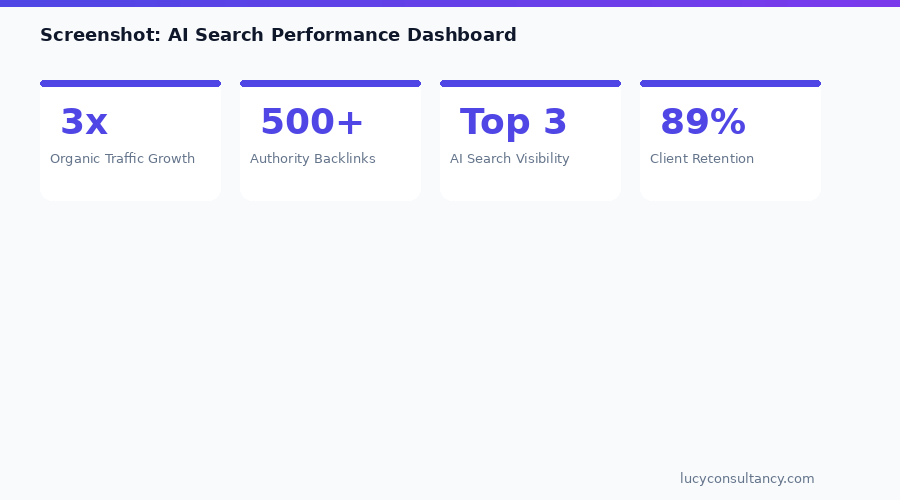 Figure 3: Example dashboard tracking AI search citation rates, referral traffic, and brand query growth
Case Study: AI Search Visibility Results
To illustrate the practical impact of ai search comparison, here is a representative case study from Lucy Consultancy:
Client: B2B SaaS company in the project management space Challenge: The client ranked well on Google for target keywords but had zero visibility in AI-generated answers when prospects asked ChatGPT or Perplexity for software recommendations.
Strategy:
- Conducted AI query audit across 50 buyer-intent prompts
- Restructured key landing pages with answer blocks and increased factual density
- Implemented comprehensive schema markup
- Launched digital PR campaign generating coverage on 30+ industry publications
- Created comparison content positioned as objective analysis
- Built presence on Reddit and Quora with authentic expert contributions
Results (6 months):
- Brand cited in 34% of relevant AI-generated answers (up from 0%)
- AI search referral traffic: 2,400 monthly visitors (new channel)
- Overall organic traffic increased 47% as traditional SEO and AEO efforts compounded
- Demo requests from AI referral traffic converted at 3.1x the rate of general organic traffic
This case study demonstrates that AEO and traditional SEO are complementary — improvements in one channel typically benefit the other. The authority signals built for AI visibility (backlinks, brand mentions, structured content) also strengthen traditional rankings.
The Future of AI Search and What to Prepare For
The ai search comparison landscape is evolving rapidly. Here are the key developments we expect to shape the space over the next 12-24 months:
Agentic AI Search Autonomous AI agents that research, compare, and make purchasing decisions on behalf of users are emerging. These agents will interact with websites differently than human users, requiring new optimisation approaches including machine-readable product information and API-accessible data.
Personalised AI Responses AI search platforms are increasingly personalising responses based on user history, preferences, and context. This means the same query might return different source citations for different users, making broad authority and multi-channel presence even more important.
AI Search Advertising Google, ChatGPT, and Perplexity are all experimenting with advertising formats within AI-generated responses. Understanding how paid and organic visibility will coexist in AI search is a developing strategic consideration.
Regulation and Transparency As AI search becomes more influential in consumer decisions, regulatory frameworks around citation accuracy, source attribution, and AI-generated recommendations are likely to emerge.
What to Do Now:
- Start measuring your AI search visibility today
- Audit your content for AI-extraction readiness
- Invest in authority building across multiple platforms
- Stay informed about platform changes and new opportunities
- Do not abandon Google SEO — it remains the foundation
The businesses that begin investing in ai search comparison now will have a significant competitive advantage as AI search continues to grow.
How Lucy Consultancy Can Help
Lucy Consultancy is at the forefront of ai search comparison, combining deep SEO expertise with specialised AI search optimisation capabilities. Our AEO services includes:
- AI Visibility Audit: Comprehensive analysis of your current visibility across ChatGPT, Perplexity, Google AI Overviews, and Claude
- Citation Strategy Development: Custom strategy for increasing your brand's citation rate in AI-generated answers
- Content Restructuring: Optimising existing content for AI extraction while maintaining traditional ranking performance
- Authority Building: Digital PR and brand building campaigns designed to increase trust signals that AI systems recognise
- Ongoing Monitoring: Monthly tracking of AI search performance with clear reporting on citation rates, share of voice, and referral traffic
- Strategic Adaptation: Continuous strategy evolution as AI search platforms update their selection and citation mechanisms
Our integrated approach ensures that your SEO and AEO strategies work together, each reinforcing the other for maximum search visibility across all platforms.
Ready to become visible in AI search? Contact Lucy Consultancy for a free AI visibility audit.
About Lucy Consultancy
Lucy Consultancy is a leading SEO and AEO agency helping businesses achieve sustainable organic growth through data-driven search strategies. Our team combines deep technical expertise with creative content marketing to deliver measurable results across both traditional search and AI-powered platforms.
Ready to grow your organic visibility? Contact Lucy Consultancy for a free SEO audit and strategy consultation.
Sources and References
- Google Search Central Documentation (2026)
- Ahrefs Blog — SEO Research and Data Studies
- Semrush — State of Search Report 2026
- BrightEdge Research — Organic Search Statistics
- Gartner — AI Search Market Predictions
- Statista — Digital Marketing Statistics 2026
- BrightLocal — Local Consumer Review Survey 2026
- Google Search Quality Rater Guidelines (Latest Edition)
Keywords: ai search comparison, chatgpt vs perplexity, ai search market share, ai search platforms
Category: AEO & AI Search | Last Updated: 2026-01-18